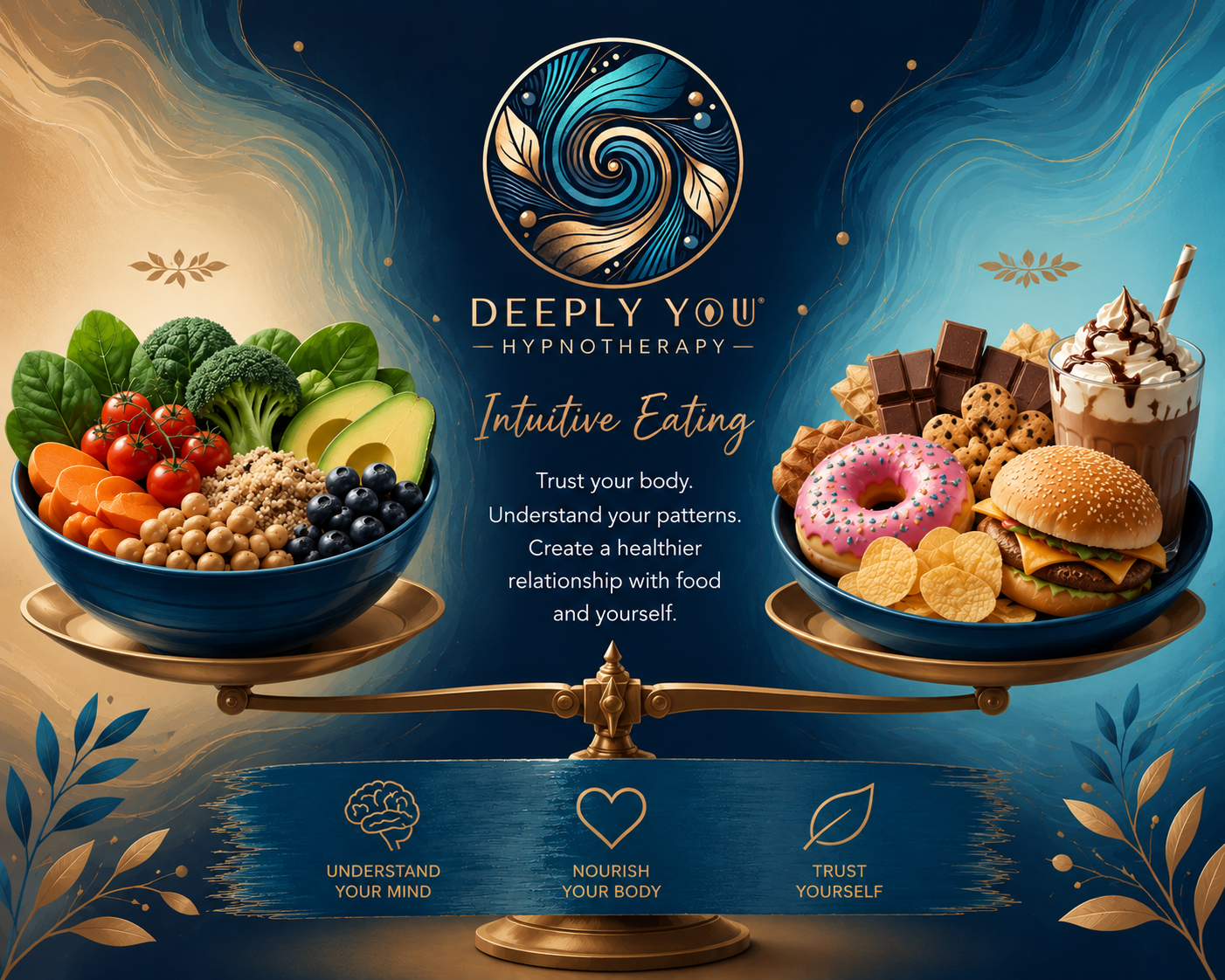
Top 5 Questions About Hypnotherapy for Intuitive Eating
If you’ve spent years dieting, feeling guilty around food, or battling emotional eating patterns, you may have come across the term intuitive eating and wondered what it actually means — and whether hypnotherapy can really help.
As a hypnotherapist, these are some of the most common questions I hear from clients who want a healthier, calmer relationship with food.
1. What is intuitive eating?
Intuitive eating is an approach that focuses on rebuilding trust with your body rather than following strict food rules or diets.
Instead of constantly controlling, restricting, or obsessing over food, intuitive eating encourages you to reconnect with:
- hunger cues
- fullness cues
- satisfaction
- emotional awareness
- body trust
It is not about “eating whatever you want all the time” or giving up on health.
In fact, many people find that once guilt, restriction, and food anxiety reduce, eating becomes far more balanced and peaceful naturally.
2. Can hypnotherapy help with emotional eating?
Yes — and this is one of the biggest reasons people seek support.
Emotional eating is rarely just about food itself. Often, food becomes linked with:
- comfort
- stress relief
- boredom
- overwhelm
- loneliness
- reward
- emotional coping
Over time, these patterns can become automatic and subconscious.
Hypnotherapy works with the subconscious mind, which is where many habits, emotional responses, and beliefs are stored. Rather than relying purely on willpower, hypnotherapy helps explore the deeper emotional triggers behind eating behaviours so lasting change feels more natural.
3. Will I lose weight with intuitive eating?
This is one of the most common concerns people have.
The primary goal of intuitive eating is not rapid weight loss — it is healing your relationship with food, your body, and yourself.
However, many people find that when they stop:
- restricting food
- bingeing
- emotionally eating
- constantly dieting
- feeling guilty around food
…their eating patterns often become more balanced over time.
Weight may change as a result, but the focus shifts away from punishment and control towards long-term wellbeing, emotional health, and sustainable habits.
4. Why do I eat when I’m not hungry?
There are many reasons people eat beyond physical hunger.
Sometimes eating is driven by:
- stress
- anxiety
- habit
- emotional comfort
- exhaustion
- avoidance
- self-soothing
For many people, these patterns developed over years and may even trace back to childhood experiences, emotional needs, or coping mechanisms learned early in life.
This is why simply telling yourself to “have more willpower” often doesn’t work.
Hypnotherapy can help increase awareness of these patterns while supporting healthier emotional responses and coping strategies.
5. Can hypnotherapy really change eating habits?
Hypnotherapy is not mind control, and it does not magically force change overnight.
What it can do is help you:
- change subconscious thought patterns
- reduce emotional triggers
- build healthier habits
- improve self-worth and confidence
- feel calmer around food
- develop greater self-awareness
Many people find that once they stop fighting themselves constantly, healthier choices begin to feel easier and more natural.
The goal is not perfection.
The goal is creating a more compassionate, balanced relationship with food and with yourself.
Final Thoughts
If food feels emotionally exhausting, overwhelming, or all-consuming, you are not alone.
So many people have spent years trapped in cycles of restriction, guilt, emotional eating, and self-criticism.
Healing your relationship with food is possible — and it does not have to come from more shame, pressure, or punishment.
Through hypnotherapy and intuitive eating approaches, you can begin learning how to trust yourself again, understand your emotional patterns, and create a healthier relationship with food from the inside out.
If you’d like support with emotional eating, food anxiety, or building a healthier relationship with yourself, you can learn more at Deeply You Hypnotherapy or get in touch to book a consultation.